Borrowed Chords Explained: Fm, A♭ and B♭ in the Key of C (Free Chart PDF)
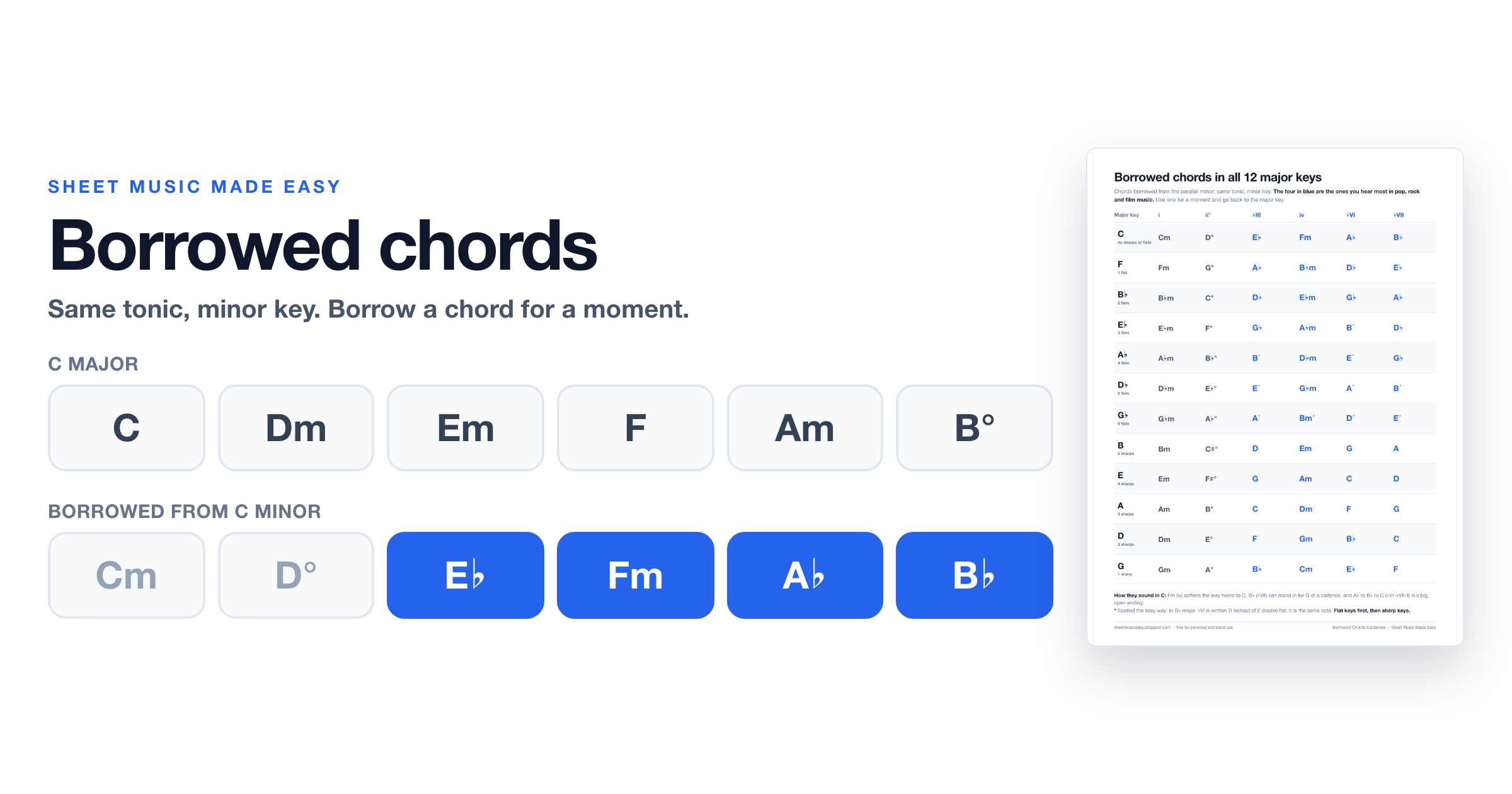
A borrowed chord is a chord taken from the parallel minor key, the minor key with the same tonic, and used for a moment in a major key. In C major, the favourites are Fm, A♭, B♭ and E♭. They add a darker or more open colour without leaving the key, which is why you hear them everywhere from film scores to rock songs. The free chart below lists them in all 12 major keys.
What it is
C major and C minor share the same home note, C. They are called parallel keys. A borrowed chord is simply a chord from C minor that turns up in a song in C major: you borrow it for a beat or a bar, and then the music carries on in major.
You will also see this called modal mixture or modal interchange. All three names mean the same thing. The point is colour: the borrowed chord brings in one or two notes from the minor key, and the ear hears a shadow pass over the music without losing track of home.
Major chord, borrowed chord
Put a chord from the key next to its borrowed version and the difference is just one or two notes, each a half step lower. F becomes Fm when A drops to A♭. Am becomes A♭ when the whole chord slides down: A to A♭ and E to E♭. The notes from outside the key are in blue.
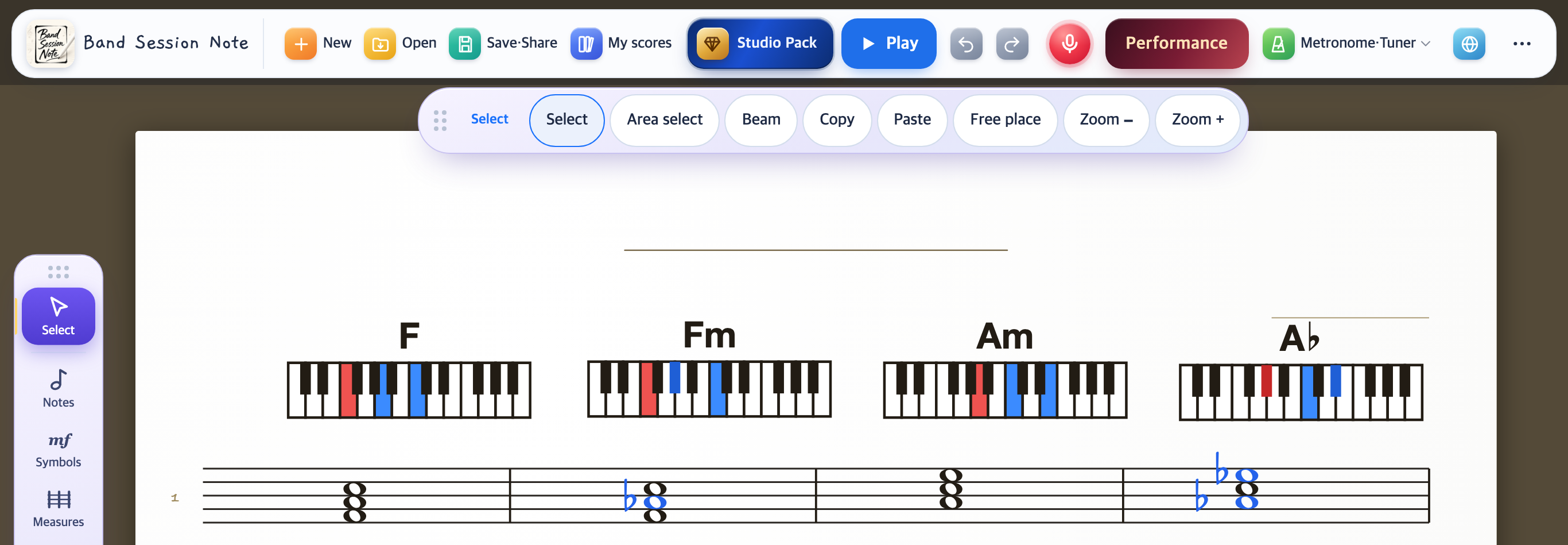
That is why the Roman numerals carry a flat: ♭VI means the chord is built on the lowered 6th of the key, A♭ in C, not on A.
The four you hear most
C minor has more chords to lend, but four of them do most of the work in pop, rock and film music:
| Name | Chord in C | Notes | From outside the key |
|---|---|---|---|
| iv | Fm | F, A♭, C | A♭ |
| ♭VI | A♭ | A♭, C, E♭ | A♭ and E♭ |
| ♭VII | B♭ | B♭, D, F | B♭ |
| ♭III | E♭ | E♭, G, B♭ | E♭ and B♭ |
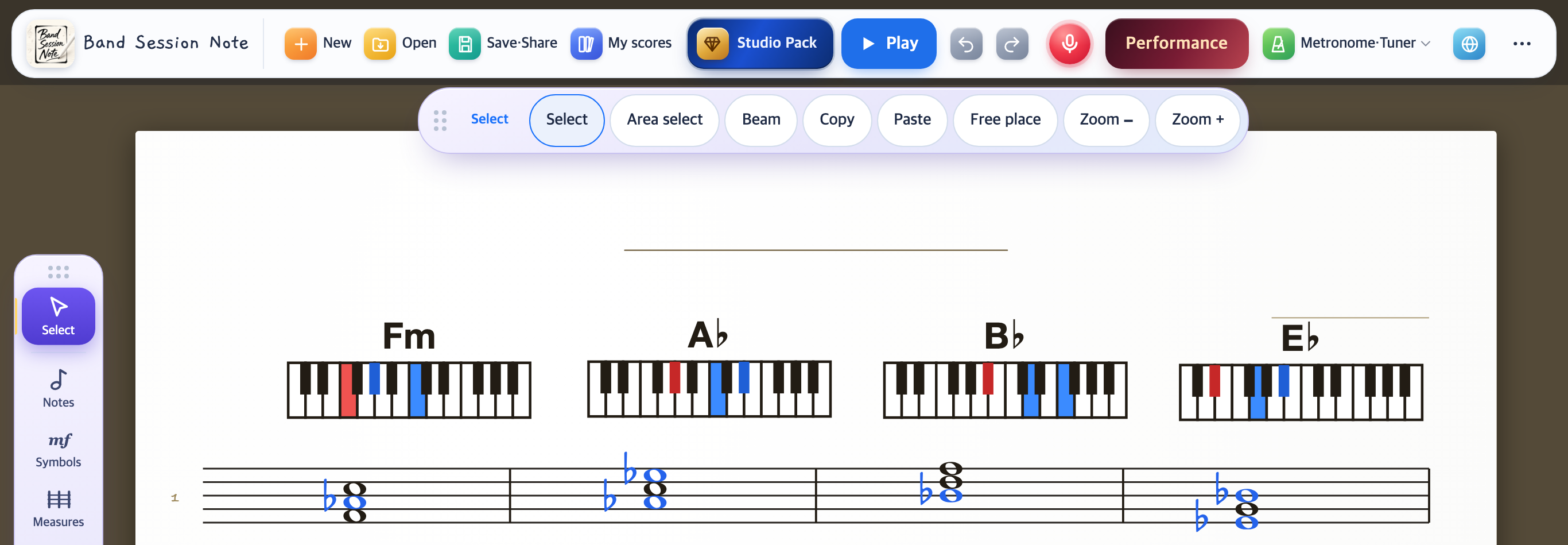
The others on the chart, Cm (i) and D° (ii°), are borrowed too, but they show up less often. In a 7th-chord setting the ii chord becomes Dm7♭5, a darker way into G7.
Where to use them
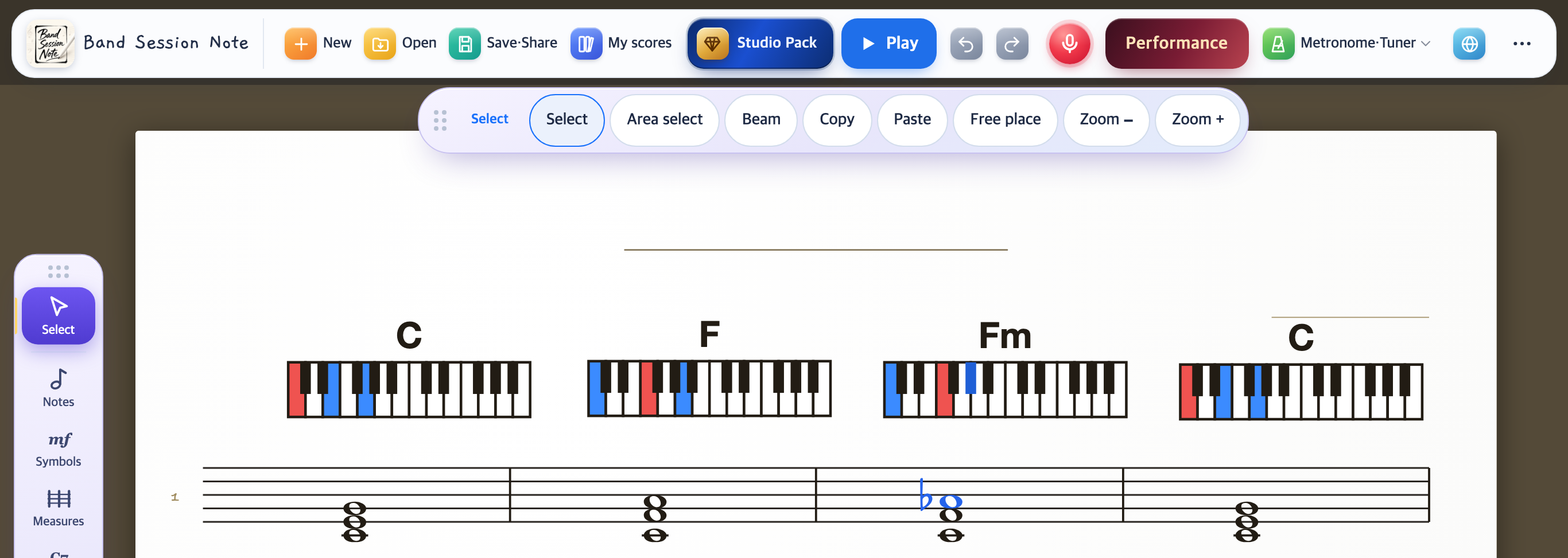
The best-known move is the minor iv on the way home: C, F, Fm, C. Here the top note walks down one half step at a time, A to A♭ to G, and that little slide is the bittersweet sound of the minor iv.
They also mix with other outside chords. Secondary dominants bring in notes from outside the key too, but they point at the next chord; a borrowed chord changes the colour of the chord itself.
Four common mistakes
1. Building on the wrong root. ♭VI in C is A♭ major, not A major or A minor. The flat in the name applies to the root.
2. Treating it as a key change. A borrowed chord is a visit. Go back to the major key soon, or the music really does start to sound like C minor.
3. Clashing with the melody. If the melody sits on A while you play Fm, the A rubs against the A♭ of the chord. Check the melody note before you borrow.
4. Using them everywhere. One borrowed chord in the right place does more than four in a row. Save them for the moment you want the colour to change.
How to practise it
1. Play C, F, Fm, C slowly with the voicing in the picture and listen to the top note slide down.
2. End a phrase three ways: G to C, B♭ to C, then A♭ to B♭ to C. Same home, three different moods.
3. Take a song you play in a major key and swap one IV chord for a minor iv.
4. Print the chart and find the four blue chords in the keys your band uses most.
FAQ
What is a borrowed chord?
A chord from the parallel key, the major or minor key with the same tonic, used for a moment. In a major key it usually comes from the parallel minor, like Fm in C major.
Is modal interchange the same as a borrowed chord?
Yes. Borrowed chords, modal mixture and modal interchange are different names for the same idea.
Which borrowed chords are most common?
In a major key: iv, ♭VI, ♭VII and ♭III. In C that is Fm, A♭, B♭ and E♭.
Can a minor key borrow from major?
Yes. The best-known case is ending a minor piece on a major tonic chord, called a Picardy third.
Is ♭VII the same as V7?
No. B♭ can stand in for G at a cadence in C, but it has no B natural, the note that pulls up to C. That is why ♭VII to I sounds relaxed while V7 to I sounds final.
Every example on this page was written in Band Session Note, the iPad notation app I make. The pictures are the app’s own screen.


Comments
Post a Comment